A commercial entrance canopy is more than an architectural accent — it is the first thing visitors, patients, students, and tenants experience when they approach your building. The right canopy shields people from rain, wind, and sun while reinforcing the image you want your facility to project. The wrong one becomes a maintenance headache that detracts from curb appeal within a few short years.
With more than 26,000 completed projects nationwide and over four decades of design-build glazing experience, Crystal Structures has engineered canopy and walkway covers for hospitals, hotels, schools, senior living communities, retail centers, government buildings, and industrial facilities across the country. Here is what we have learned about selecting the right commercial canopy system for any application.
What Makes a Commercial Canopy System Worth the Investment
Commercial entrance canopies serve three core functions. First, they protect pedestrians from the elements at the exact moment those pedestrians are forming an opinion about your building. Second, they manage water runoff and drainage, preventing pooling, splash-back, and slippery walkways. Third, they create a visual transition between the exterior environment and the interior space, setting the tone for the experience inside.
When a canopy is designed correctly, it accomplishes all three without calling attention to itself. When it is designed poorly — or simply bolted on as an afterthought — it becomes a liability.
Entrance Canopy Materials — Glass vs. Polycarbonate vs. Metal Framed Systems
Choosing the right material is the single most consequential decision in entrance canopy design. Each option brings distinct advantages.
Glass Canopy Entrance Systems
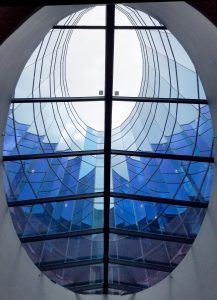
Glass canopies deliver a clean, modern aesthetic that lets natural light pass through while providing full weather protection. Crystal Structures uses only tempered or tempered-over-laminate glass — never annealed — supported by corrosion-proof aluminum framing. Point-supported glass canopies, which attach panels to the structure through bolt fittings, minimize visible framing for a sleek, artistic look that has been a proven design solution since the 1960s.
Glass is the material of choice when the architect wants maximum transparency, high-end appeal, and long-term durability at a building entrance.
Polycarbonate Canopy Systems
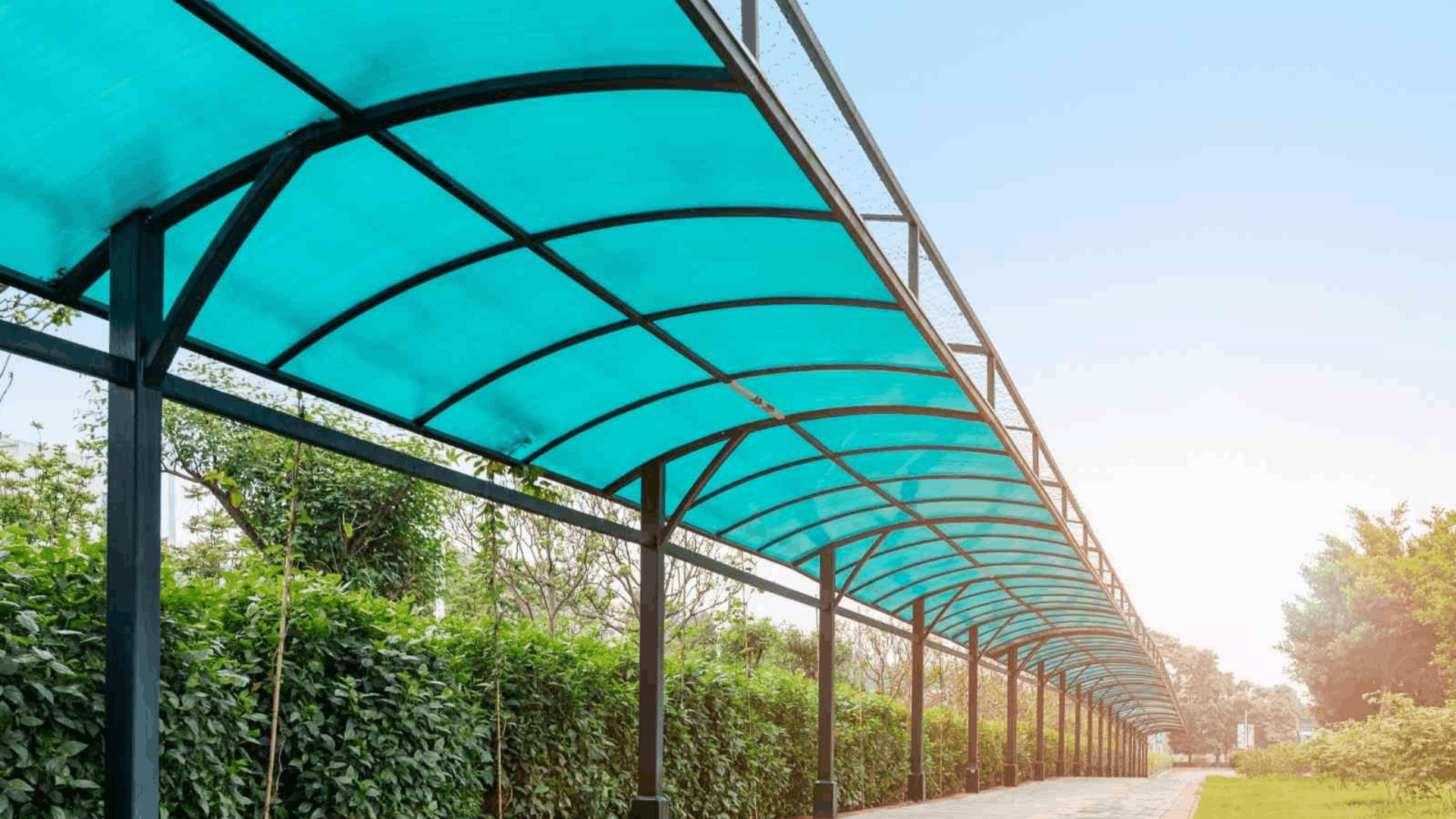
Polycarbonate is a high-impact, lightweight material that offers outstanding thermal insulation and UV resistance. Multi-wall polycarbonate panels can be curved easily, making them ideal for barrel-type walkway covers, dramatic curved entry canopies, and domed enclosures. Crystal Structures offers a 20mm translucent standing seam polycarbonate system designed specifically for canopies and walkways, with panels available up to 43 feet long.
Polycarbonate canopy systems are an excellent fit for projects where budget efficiency, light transmission, and design flexibility all matter — such as school walkway covers, industrial walkway covers, or senior living canopies that need to balance cost with comfort.
Metal Framed Canopy Systems
All Crystal Structures canopies use maintenance-free aluminum extrusions as their structural backbone, the same framing used in their commercial skylight systems. Metal framed canopy systems provide the strength to span wide entrances and long walkways while resisting corrosion in every climate. Frame colors can be customized to match building exteriors, and the aluminum framing integrates seamlessly with both glass and polycarbonate glazing panels.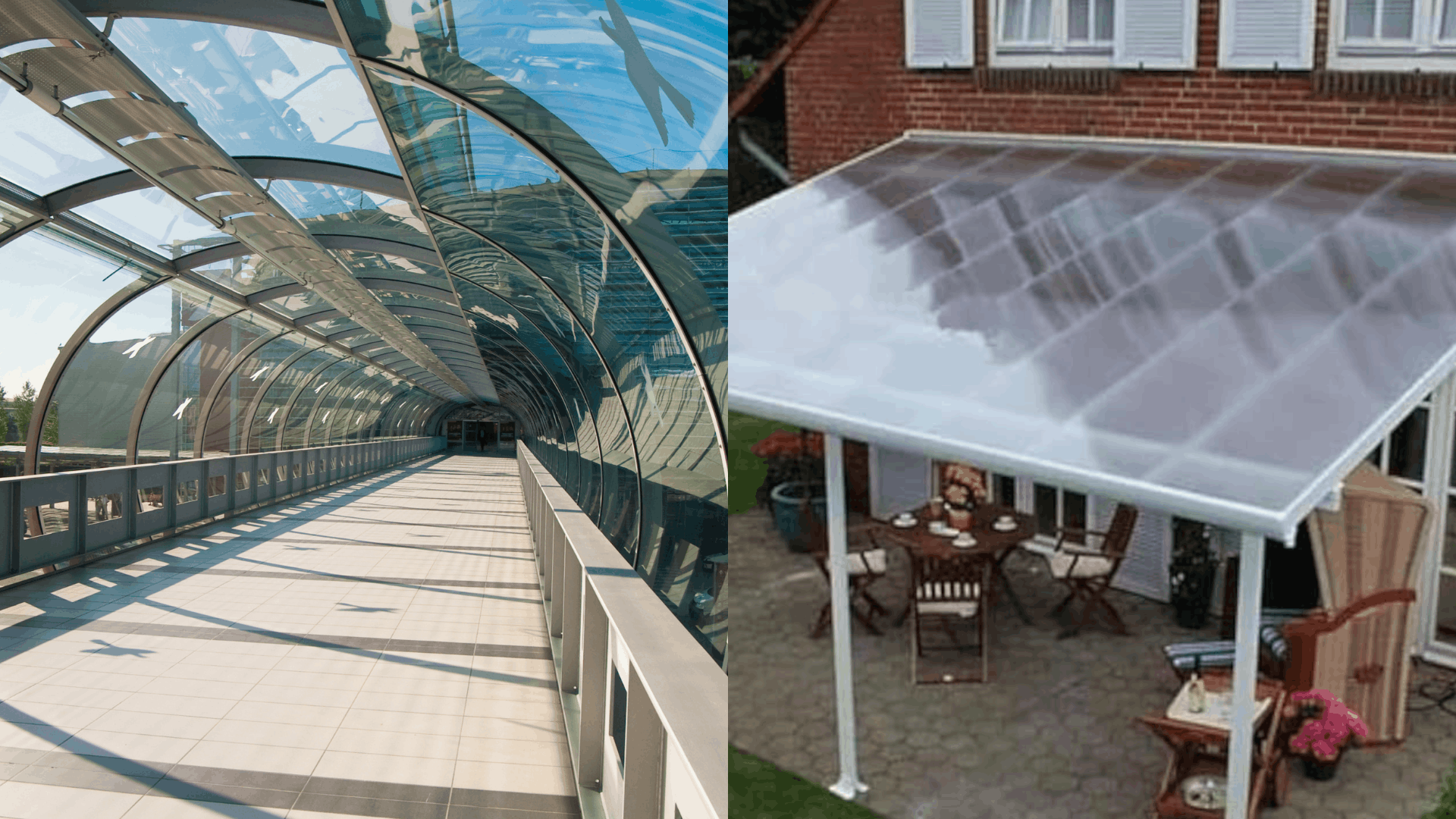
Walkway Canopy vs. Awning — Understanding the Difference
Property managers and developers sometimes use the terms interchangeably, but a walkway canopy and an awning are different structures. Awnings are typically fabric-covered, slope in one direction, and attach directly to a building wall. Walkway canopies are rigid, self-supporting or structurally attached systems that can span between buildings, cover long pedestrian corridors, and handle significant wind, snow, and rain loads.
For commercial applications — hospital entrance canopies, hotel entrance canopies, retail entrance canopies, and government building canopies — a glazed canopy system is the far more durable, lower-maintenance solution compared to a fabric awning.
Canopy Drainage for Commercial Buildings
Water management is a critical but often overlooked element of commercial canopy installation. Poorly drained canopies create puddles on the roof surface, accelerate sealant deterioration, and dump sheets of water onto pedestrians at the canopy edge. Crystal Structures engineers integrated drainage into every canopy design, accounting for roof pitch, gutter placement, and connection points to the building’s stormwater system so water is controlled from the moment it hits the panel.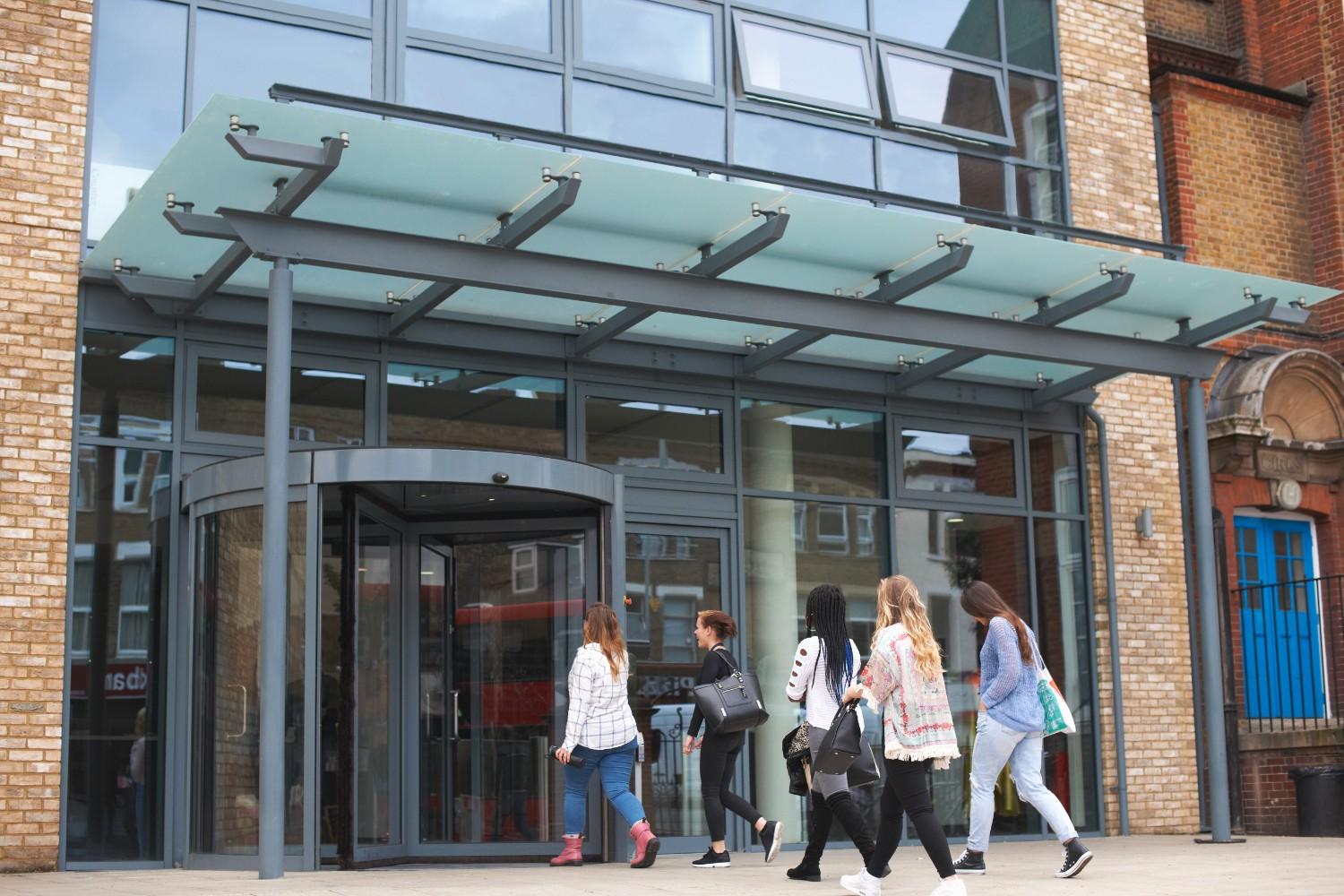
Why a Single-Source Glazing Contractor Matters
Crystal Structures is one of the only companies in the country that handles design, engineering, manufacturing, and installation of commercial canopy glazing entirely in-house. That single-source, design-build glazing approach eliminates the finger-pointing that happens when separate firms handle design and installation. It means one team is accountable for the finished product — from the first concept sketch through the final walkthrough.
Whether you need a standalone glass canopy entrance for a new hotel or a full walkway canopy system connecting multiple buildings at a medical campus, having a nationwide skylight and canopy installer with over 40 years of expertise makes the process faster, more predictable, and built to last.
Ready to start your canopy project? Contact Crystal Structures for a no-cost design collaboration with our team.