Building owners, architects, and facility managers ask Crystal Structures hundreds of questions every year about translucent roof systems, daylighting performance, skylight maintenance, and glazing specifications. With more than 26,000 completed projects and over four decades of commercial glazing experience, we have compiled the answers that matter most — organized by the questions we hear again and again.
How Do Translucent Roof and Wall Systems Work?
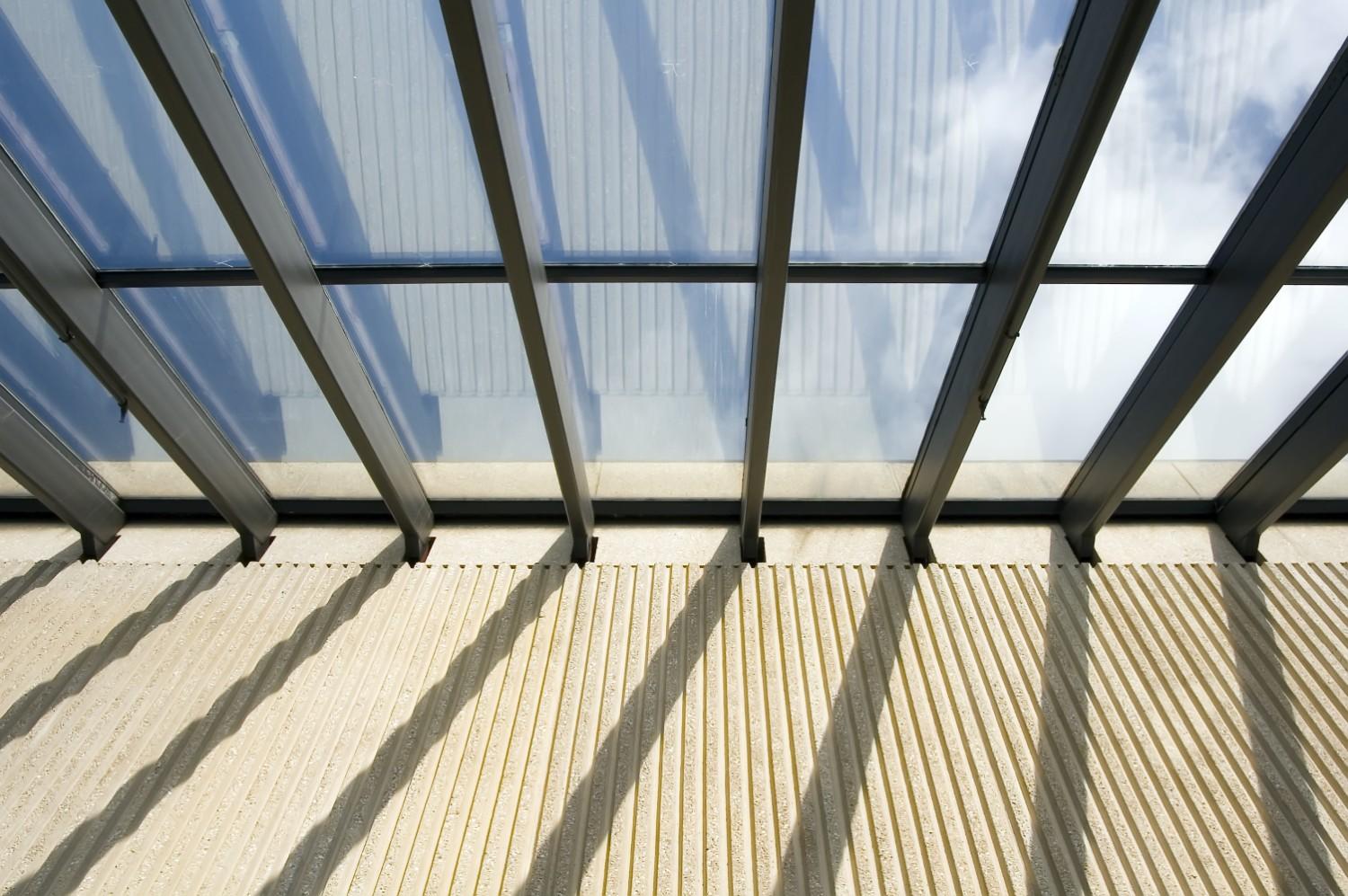
A translucent roof system replaces sections of opaque roofing with multi-wall polycarbonate panels or structural polycarbonate sandwich panels. Sunlight passes through the material but is scattered by its internal cell structure, producing diffused, glare-free illumination across the interior. Translucent wall systems follow the same principle, replacing upper sections of metal wall cladding with polycarbonate wall panels. Crystal Structures’ 2¾-inch structural polycarbonate sandwich panel is engineered specifically for energy-efficient translucent skylights and clear-view wall applications, available in spans up to six feet wide.
How Do You Get Natural Light Into a Warehouse?
Warehouses have vast floor areas, tall ceilings, and limited exterior wall exposure. The most effective approach is combining translucent roof panels integrated into the roof deck with translucent wall systems along clerestory zones. This dual strategy delivers broad, uniform daylighting that can reduce lighting-related electricity costs by 20 to 40 percent — without compromising security, insulation, or structural integrity.
What Is the Difference Between Polycarbonate and Fiberglass Roofing?
Polycarbonate is up to 250 times more impact-resistant than glass and maintains its light transmission far longer than fiberglass. Fiberglass reinforced panels yellow, become brittle, and lose translucency within 10 to 15 years. Polycarbonate panels with UV-protective coatings resist degradation for 20 years or more — making them the preferred material for commercial walls and roofs in new construction and retrofit projects alike.
What Is Structural Glazing?
Structural glazing refers to systems where the glass or polycarbonate panels carry load and contribute to the building’s structural performance rather than simply filling an opening in a separate frame. Crystal Structures engineers structural glazing roof and wall assemblies that integrate panels, framing, flashing, and drainage as a unified system — ensuring long-term performance under wind, snow, and thermal loads.
Why Do Schools and Hospitals Use Daylighting?
Research consistently shows that natural daylight improves student test scores, reduces absenteeism, and accelerates patient recovery in healthcare settings. Schools and hospitals also operate during peak daylight hours, maximizing energy savings. The LEED v4 Daylight credit specifically rewards projects that deliver controlled natural light to regularly occupied spaces, and translucent systems are one of the most reliable paths to earning those points — with the added benefit of higher lease rates and stronger resale values for LEED-credited buildings.
When to Use Skylights vs. Translucent Roof Panels
Use metal framed skylights — such as Crystal Structures’ SkyQuest non-structural skylight or thermally enhanced unit skylight — for targeted daylighting in lobbies, atriums, and corridors. Choose translucent roof panels when the goal is broad, uniform light across large floor areas like warehouses, factories, and gymnasiums. Many projects benefit from combining both for maximum coverage and architectural impact. For industrial buildings, multi-wall polycarbonate panels are the clear winner — they withstand forklift impacts, hail, and high wind loads while delivering consistent daylighting.
How Do You Repair a Commercial Skylight and What Causes Leaks?
Skylight leaks are the number one service call in commercial glazing, and the panel itself is rarely the problem. The most common causes are sealant degradation from UV and thermal cycling, improper flashing at the roof transition, condensation mismanagement in humid environments, thermal movement at framing joints, and clogged internal drainage channels. Repair starts with a thorough on-site inspection to identify the root cause — then addressing degraded sealants, replacing individual panels, correcting flashing details, or clearing drainage paths. Crystal Structures performs all repairs in-house using the same materials and engineering standards as new construction.
When Should Skylights Be Replaced?
Replace rather than repair when framing shows widespread corrosion, fiberglass panels have yellowed and lost structural integrity, the system no longer meets current energy or wind-load codes, or repeated repairs have failed to resolve chronic leaks. A building re-roofing project is the ideal time to upgrade aging skylights simultaneously. Crystal Structures also provides maintenance programs for translucent roof panels, including semi-annual inspections, annual cleaning, drainage clearing, and proactive gasket replacement — along with sunroom and solarium repair services through their Sunshine Rooms brand.
How Do Architects Specify Glazed Structures for No-Leak Performance?
A strong glazing specification addresses five areas: panel material and thickness, framing system and thermal break details, flashing and waterproofing integration with the roof membrane, drainage capacity sized for the building’s climate zone, and structural load requirements including wind uplift and snow loads. Crystal Structures’ design team collaborates with architects at no upfront cost to develop specifications that account for all five — ensuring the finished system performs as a fully integrated assembly rather than a collection of parts sourced from different vendors. That single-source, design-build glazing approach is why Crystal Structures is frequently chosen for high-reputational-risk projects with complex, custom designs.
Have a question we did not cover? Contact Crystal Structures to speak with our engineering and design team at no cost.