Choosing a commercial canopy involves more decisions than most building owners expect. Material selection, sizing, drainage engineering, long-term maintenance, and installation logistics all influence the outcome. Below, Crystal Structures answers the questions we hear most often from architects, contractors, developers, and facility managers across the country.
How Do I Choose the Right Commercial Entrance Canopy?
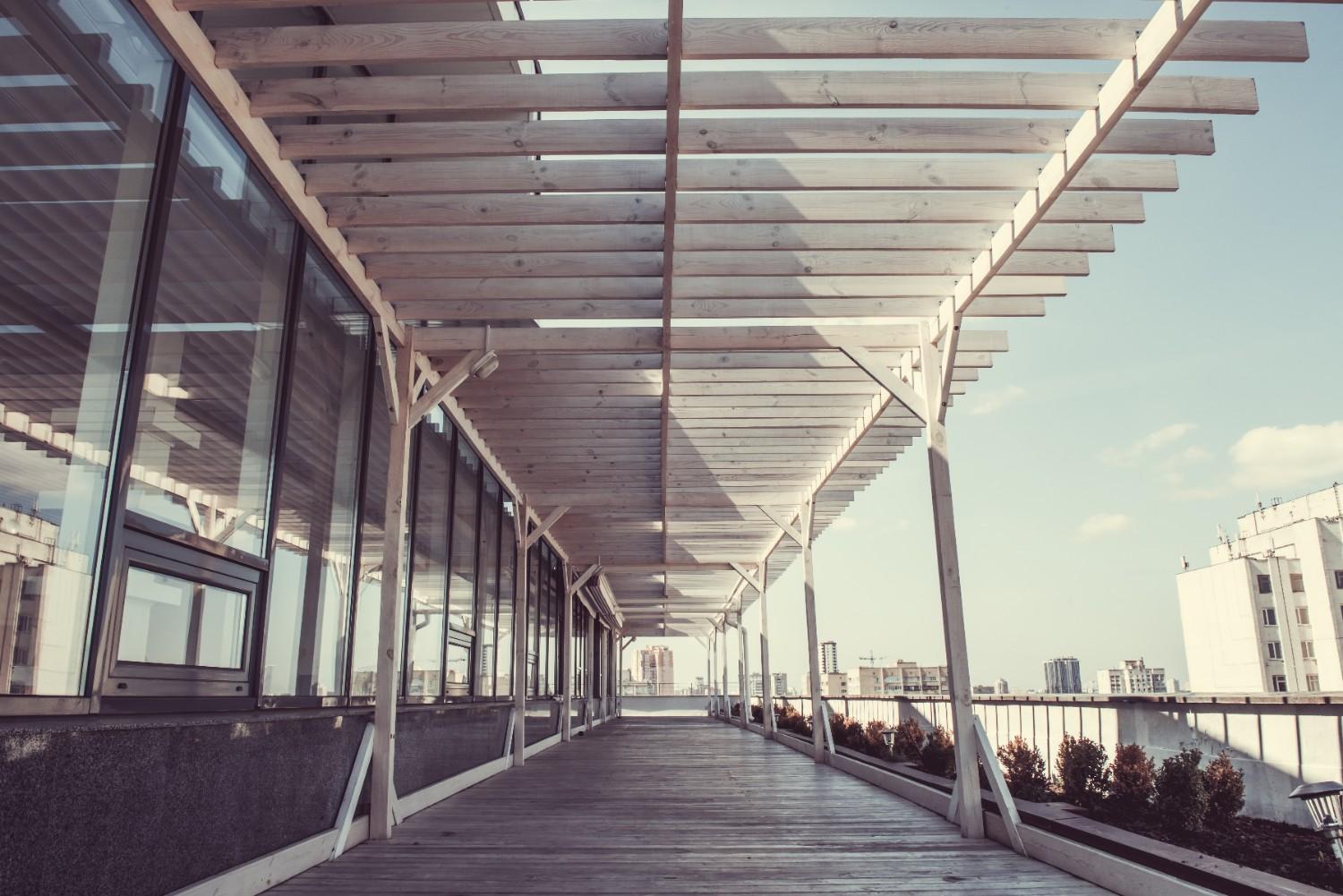
Start with three factors: function, environment, and aesthetic intent. A hospital entrance canopy that must shelter patients being transferred from vehicles has different span, height, and drainage requirements than a retail entrance canopy designed primarily for curb appeal. Consider your local climate — wind loads, snow loads, and UV exposure all dictate which framing and glazing combination will perform best. Finally, align the canopy style with the building’s architectural language. Crystal Structures’ no-cost design collaboration process helps owners and architects work through these variables before any commitment is made.
How Much Does a Commercial Walkway Canopy Cost?
Commercial walkway canopy pricing varies based on length, width, glazing material, structural requirements, and site conditions. A straightforward polycarbonate walkway cover for a school campus will land at a different price point than a point-supported glass canopy entrance for a Class A office building. Because Crystal Structures handles design, engineering, manufacturing, and installation in-house, there are no markups between trades — which typically makes the single-source model more cost-predictable than multi-vendor approaches. The best way to get an accurate figure is to request a project-specific consultation.
How Long Do Polycarbonate Canopies Last?
High-quality multi-wall polycarbonate panels are engineered to perform for 20 years or more when properly installed and maintained. Polycarbonate resists impact — up to 250 times stronger than glass — and maintains its light transmission and structural integrity far longer than fiberglass alternatives, which tend to yellow and become brittle within 10 to 15 years. Crystal Structures uses only premium polycarbonate with built-in UV protection on every canopy project.
How Do Canopy Drainage Systems Work?
Effective canopy drainage starts at the design stage. The canopy’s pitch directs water toward integrated gutters or channels built into the aluminum framing. From there, downspouts route water to the building’s stormwater system or to grade-level discharge points. Crystal Structures engineers drainage into every canopy design so that water is controlled from the moment it contacts the panel — preventing pooling on the canopy surface, splash-back onto pedestrians, and ice formation in cold climates.
How Do You Maintain a Glass Entrance Canopy?
Glass canopies are low-maintenance by design. Periodic cleaning with non-abrasive solutions keeps panels clear, and annual inspections of sealant joints, drainage channels, and structural connections ensure long-term performance. Because Crystal Structures uses only tempered or tempered-over-laminate glass with corrosion-proof aluminum framing, there is no repainting, no rust treatment, and no panel degradation to manage over time.
What Is the Best Material for Commercial Entrance Canopies?
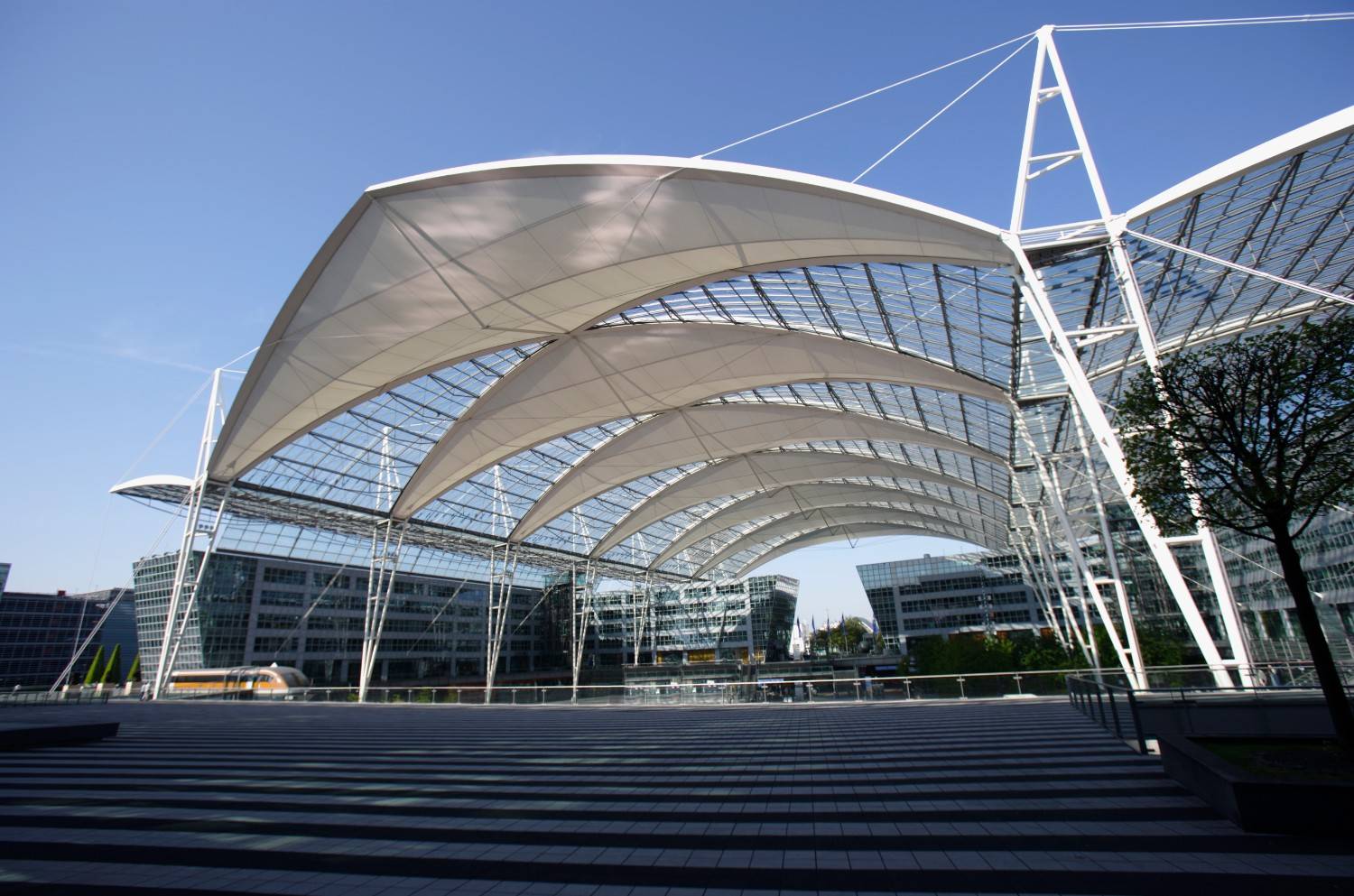
There is no single best material — the right choice depends on the project. Glass delivers maximum transparency and a premium aesthetic, making it ideal for hotel entrance canopies and corporate lobbies. Polycarbonate offers superior impact resistance, thermal insulation, and design flexibility — especially for curved canopy profiles — at a lower material cost, making it a strong choice for school walkway covers, senior living canopies, and industrial walkway covers. Both options are supported by metal framed canopy systems using maintenance-free aluminum extrusions.
What Is the Difference Between a Canopy and an Awning?
An awning is a fabric-covered structure that slopes in one direction and mounts directly to a building wall. A commercial canopy is a rigid, structurally engineered system — typically glazed with glass or polycarbonate — that can be freestanding or building-attached, span wide entrances, and handle significant wind, rain, and snow loads. For commercial buildings that need long-term durability and minimal maintenance, a glazed canopy system outperforms a fabric awning in every measurable category.
What Size Entrance Canopy Do I Need?
Canopy sizing depends on the entrance width, expected pedestrian volume, and the coverage depth needed to protect people from wind-driven rain. As a general guideline, the canopy should extend at least four to six feet from the building face and span the full width of the entrance doors plus additional clearance on each side. Crystal Structures’ engineering team models these dimensions against local weather data to ensure adequate protection without overbuilding.
Why Do Commercial Buildings Need Entrance Canopies?
Entrance canopies protect pedestrians, reduce slip hazards from wet floors inside the vestibule, limit water and debris intrusion at entry points, and establish the visual identity of the building. For facilities that serve vulnerable populations — hospitals, government buildings, senior living communities — canopies are a functional necessity, not a cosmetic upgrade.
Why Choose a Metal-Framed Canopy System?
Metal framed canopy systems — specifically those built with aluminum extrusions — combine structural strength with zero corrosion risk. Aluminum will not rust, does not require repainting, and can be powder-coated in virtually any color to match building exteriors. Crystal Structures uses the same aluminum framing across its canopy and skylight product lines, ensuring proven performance and parts availability for decades after installation.
When Should You Replace a Commercial Canopy?
Common indicators include visible discoloration or hazing of glazing panels, persistent leaks despite resealing, structural corrosion in the framing, or panels that no longer meet current building or energy codes. If your existing canopy uses fiberglass panels, replacement with modern polycarbonate or glass is often more cost-effective than repeated repairs. Crystal Structures provides repair and replacement services nationwide.
Where Can I Get Commercial Canopy Installation Nationwide?
Crystal Structures installs commercial canopies, walkway covers, and glazed entrance systems across all 50 states. With over 26,000 completed projects and more than 40 years of experience, they are one of the only companies in the country offering true single-source, design-build canopy solutions — from initial concept through final installation — anywhere in the nation.
Have a canopy question we did not cover? Contact Crystal Structures to speak directly with our engineering and design team.