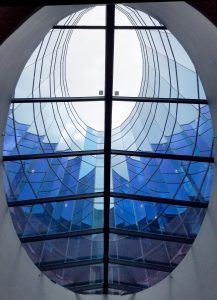
When thinking about the quality of natural daylight and its impact on human health, here are some key factors that need to be considered:
Studies suggest a strong link between access to daylight and enhanced alertness, memory, and overall cognitive performance in workplaces and schools.
The body’s internal clock needs bright light exposure during the day (especially in the morning) and darkness at night to function optimally, which impacts sleep quality and overall health.
Sunlight exposure increases serotonin levels, which helps elevate mood and combat depression.
Indoor light is significantly less intense than outdoor light, even on cloudy days, making time spent outdoors crucial for receiving the full benefits of natural light. Not every day do we have the opportunity to spend time outdoors receiving the benefits of direct sunlight. This is why having daylighting solutions at work in our indoor environments to optimize natural light is crucial to our overall health.
The physical environment plays a large role in how much natural light one receives, which can be optimized through architectural choices. Various types of skylights, clerestories, solarium additions and many other options are available for natural daylighting in residential and commercial applications.
Direct sunlight can cause visual discomfort and increase indoor temperatures; balancing these practical issues with the need for light is important. There are many strategies to manage these negative effects, contact us directly for more information.
Effectiveness of Indoor Daylighting
Indoor daylighting is generally less effective than direct outdoor sunlight for regulating hormones due to lower light intensity and the filtering effects of windows.
- Intensity Matters: The effects on melatonin and cortisol are highly dependent on light intensity (lux). Typical indoor environments rarely reach the thousands of lux found outdoors, even on a cloudy day.
- Timing is Crucial: The timing of exposure is more critical than duration. Bright light is needed in the morning to advance the circadian clock and boost daytime hormones, while dim light is necessary in the evening to allow nighttime hormones (melatonin) to rise naturally.
- Wavelength Sensitivity: The human circadian system is particularly sensitive to the short-wavelength (blue) part of the light spectrum. Blue-enriched light is more effective at suppressing melatonin and increasing cortisol (when timed correctly in the morning) than warmer (redder) light.
Indoor daylighting can significantly affect human hormones, primarily by influencing the circadian system and the secretion of key hormones like melatonin, cortisol, and serotonin. However, its effectiveness heavily depends on the intensity, duration, timing, and wavelength of the light exposure.
Key Hormonal Effects
- Melatonin (the sleep hormone): Natural indoor light during the day helps suppress melatonin production, promoting alertness. At night, the lack of bright light triggers melatonin release, preparing the body for sleep. Exposure to even relatively low levels of artificial light at night (e.g., from screens or bright indoor lights) can disrupt this process and interfere with sleep quality.
- Cortisol (the “wake up” or stress hormone): Bright light exposure in the early morning significantly enhances the natural morning rise in cortisol (the cortisol awakening response), which is vital for energy, alertness, and resilience to daily stressors. In contrast, bright light exposure in the late evening or night can inappropriately increase cortisol levels, disrupting hormonal balance. Studies have found that bright light can increase cortisol levels by 20-40% compared to dim light conditions.
- Serotonin (the “feel-good” hormone): Exposure to natural daylight is thought to increase the brain’s release of serotonin, a neurotransmitter that helps regulate. mood, anxiety, and focus. This contributes to feelings of well-being and can help combat conditions like seasonal affective disorder (SAD).
- Vitamin D: While crucial for health, standard indoor window glass blocks the specific UVB rays needed for skin vitamin D synthesis. Therefore, indoor light provides no effective means of producing Vitamin D, which requires direct sun exposure outdoors.
- Other Hormones: Circadian disruption from improper light exposure is linked to metabolic abnormalities (affecting insulin and glucose regulation) and reproductive health issues, as the circadian clock is integrated into nearly all hormonal systems in the body.
In conclusion, optimizing indoor lighting design (e.g., maximizing morning light exposure near windows and using dim, blue-depleted light in the evening) can support hormonal health, but it often needs to be supplemented with intentional time spent outdoors for maximum benefit.
Daylighting is too important to leave to chance.
Receive Editable Specs: Contactus@csglazing.net
Schedule a CEU Class for Your Firm: jsucher@csglazing.net
Explore Our Project Gallery for Design Inspiration: https://crystalstructuresglazing.com/portfolio/
Get Early Access to the Design Assistance Center: jsucher@csglazing.net
Follow us on LinkedIn: https://www.linkedin.com/company/crystal-structures-glazing/
Let Crystal Structures help you bring your vision to light—without compromise.
———————
National Reputation As the Go-To Team
Crystal Structures is frequently chosen as the contractor-preferred sub for high-reputational risk projects with highly-custom / complex / “gotta be right” / “how do we actually do this” visionary concepts.
Your glazed structure design-to-completion team.