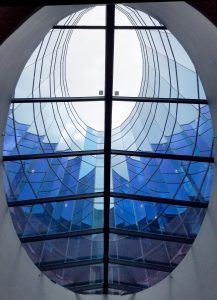
Commercial glazing projects fail for predictable reasons. Not because the glass was wrong or the engineering was flawed — but because too many parties were involved, none of them owned the full scope, and problems fell through the gaps between vendors.
The architect specifies one thing. The fabricator builds another. The installer discovers a conflict in the field. The waterproofing contractor blames the skylight company. The skylight company blames the roofer. The building owner gets a leak and a stack of change orders.
Crystal Structures was built to eliminate that chain of failure. As a single-source commercial glazing contractor, one team handles every phase of the project — design, engineering, fabrication, and installation — so there is never a question about who owns the outcome. With more than 25,000 completed projects and over 40 years of specialization, that model has proven itself across skylights, canopies, translucent wall and roof systems, greenhouses, and custom glazed structures nationwide.
Here is how the process works — and why it matters.

Phase 1 — Design Collaboration
Every project starts with a conversation, not a quote. Crystal Structures’ design team works directly with architects and building owners at no upfront cost to evaluate feasibility, explore system options, and align the glazing scope with the project’s architectural vision, structural constraints, and budget.
This is where working with a design-build skylight company adds immediate value. Rather than responding to a finished specification that may contain conflicts or unbuildable details, Crystal Structures collaborates during the design phase — identifying issues before they become change orders and recommending systems that are proven in the field.
The result is a specification that is engineered to be built, not just drawn to look good on paper.
Phase 2 — Engineering and Shop Drawings
Once the design direction is set, Crystal Structures’ in-house engineering team produces structural calculations, thermal analyses, and detailed shop drawings — all under one roof. Every glazing system is engineered to meet local building codes, wind load requirements, snow loads, seismic criteria, and ASTM/AAMA performance standards.
Because the same company that engineers the system also fabricates and installs it, there is no translation loss between the drawings and the finished product. The engineering team knows exactly how the framing will be assembled, how the panels will be sealed, and how the flashing will integrate with the roof membrane — because they have built it thousands of times before.
Phase 3 — Fabrication
Crystal Structures manufactures its own aluminum framing systems, glazing components, and structural assemblies. That vertical integration means lead times are predictable, quality control is direct, and custom configurations do not require outsourcing to third-party shops.
Panels arrive on-site pre-cut to project dimensions. Framing is fabricated to match shop drawings exactly. Hardware, gaskets, caps, and flashing components are all part of the same engineered system — not a collection of parts sourced from multiple vendors and hoped to fit together in the field.
Phase 4 — Installation
Crystal Structures’ field crews install every system they engineer and fabricate. This is the phase where the single-source model delivers its most visible advantage: the installers understand the system because their company designed and built it. There is no learning curve, no interpretation of unfamiliar shop drawings, and no improvisation when field conditions require adjustment.
For complex commercial skylight installation projects — ridge skylights, barrel vaults, pyramid configurations, or custom geometries — having the manufacturer’s own crew on-site eliminates the risk that comes with handing a specialty system to a general glazing subcontractor who has never installed it before.
Why Single-Source Eliminates Finger-Pointing
On a traditional multi-vendor project, responsibility is fragmented:
- The designer specifies a system but is not responsible for buildability
- The fabricator builds what was ordered but is not responsible for field fit
- The installer assembles what arrives but is not responsible for engineering
- The waterproofing contractor seals the perimeter but is not responsible for internal drainage
When a leak appears two years after occupancy, every party points at the next. The building owner is left chasing accountability across four different contracts.
With a single-source glazing contractor, there is one contract, one team, and one point of accountability. If the skylight leaks, it is Crystal Structures’ problem — and Crystal Structures fixes it. No finger-pointing. No jurisdictional disputes. No delays while three companies argue about whose scope the failure falls under.
The 10-Year Warranty Advantage
Crystal Structures backs its glazing systems with a 10-year skylight warranty — covering materials, fabrication, and installation under a single guarantee. That warranty is meaningful precisely because it comes from the company that designed, engineered, built, and installed the system. There is no gap between the material warranty from one vendor and the labor warranty from another.
For building owners and facility managers, this means long-term protection without the burden of tracking multiple warranty holders. For architects and construction managers, it means specifying a partner whose accountability extends a full decade past project closeout.
What Projects Benefit Most From Single-Source Delivery?
The single-source model adds value on every commercial glazing project, but the impact is greatest on:
- High-complexity geometries — barrel vaults, pyramids, curved canopies, and multi-bay skylight systems where engineering-to-field coordination is critical
- High-reputational-risk projects — museums, corporate headquarters, hospitality, healthcare, and government buildings where a visible glazing failure is unacceptable
- Tight schedules — projects where design-assist during preconstruction and manufacturer-direct installation compress the timeline
- Retrofit and replacement — aging skylight systems where the original installer is no longer available and a single company must assess, engineer, fabricate, and install the replacement

One Team. One Warranty. Zero Gaps.
As a single-source skylight contractor, Crystal Structures is one of the only commercial glazing companies in the country that controls every phase of the project — from the first design sketch through the final punch list walk. That single-source, design-build glazing model is not a marketing phrase. It is the operational structure that has delivered 25,000+ leak-free, code-compliant, architecturally integrated glazing systems across all 50 states for more than four decades.
When every phase of the project is under one roof, the complex becomes manageable — and the building owner gets the outcome they specified, not the outcome that survived the gaps between vendors.
Ready to simplify your next glazing project? Contact Crystal Structures for a no-cost design collaboration with our engineering team.