A university campus is a network of buildings that students, faculty, and staff move between dozens of times a day — in every weather condition the region can produce. Rain, snow, ice, wind, and extreme heat do not pause for class schedules. When campus master plans fail to account for pedestrian weather protection, the consequences show up as slip-and-fall injuries, reduced foot traffic to key facilities, accessibility barriers for mobility-impaired individuals, and deferred maintenance costs from water damage at every building entrance.
School walkway covers solve all of these problems with a single infrastructure investment. And when those walkways are engineered as glazed canopy systems — using glass or polycarbonate panels on corrosion-proof aluminum framing — they also bring natural daylight into the pedestrian experience rather than creating dark, tunnel-like corridors.
Crystal Structures has been designing, manufacturing, and installing covered walkway and canopy systems for campuses, hospitals, corporate facilities, and public buildings for more than 40 years. Here is how campus covered walkway design is helping higher education institutions improve their facilities.
Why Universities Need Covered Walkway Systems
Campus walkways are not a luxury — they are functional infrastructure that directly impacts student experience, institutional liability, and facility operations.
Safety and liability reduction. In northern climates, uncovered sidewalks become ice and snow hazards for months at a time. Covered walkways keep walking surfaces dry, dramatically reducing slip-and-fall incidents and the liability exposure that comes with them.
ADA accessibility. Students and staff who use wheelchairs, walkers, or other mobility aids face compounded difficulty navigating wet or icy paths. Covered walkways maintain accessible routes between buildings regardless of weather — a practical extension of the institution’s ADA compliance obligations.
Pedestrian flow between buildings. When it rains or snows, students avoid outdoor paths and crowd into indoor corridors, skyways, or shuttle systems. Covered walkways distribute foot traffic more naturally across the campus plan, reducing congestion and keeping class transitions on schedule.
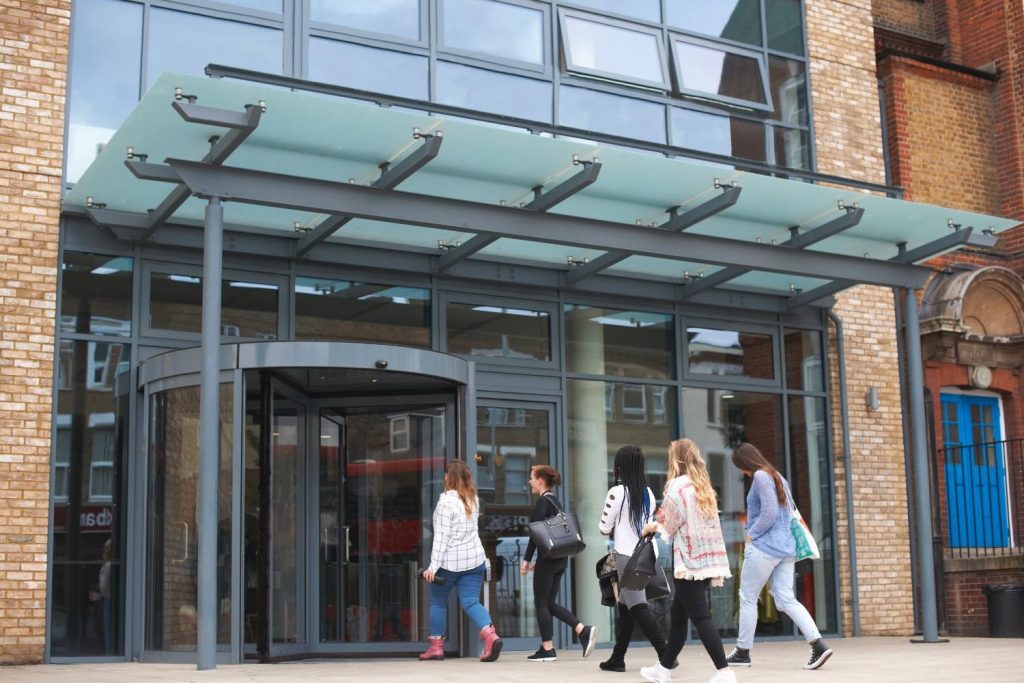
Building envelope protection. Every uncovered entrance is a point where wind-driven rain, tracked-in moisture, and debris enter the building. Entrance canopies and connected walkway covers act as the first line of defense, reducing water intrusion, floor maintenance, and HVAC load at entry vestibules.
Glass vs. Polycarbonate Walkway Covers for Campus Applications
Crystal Structures offers both glass and polycarbonate canopy systems, and the right choice depends on the campus context.
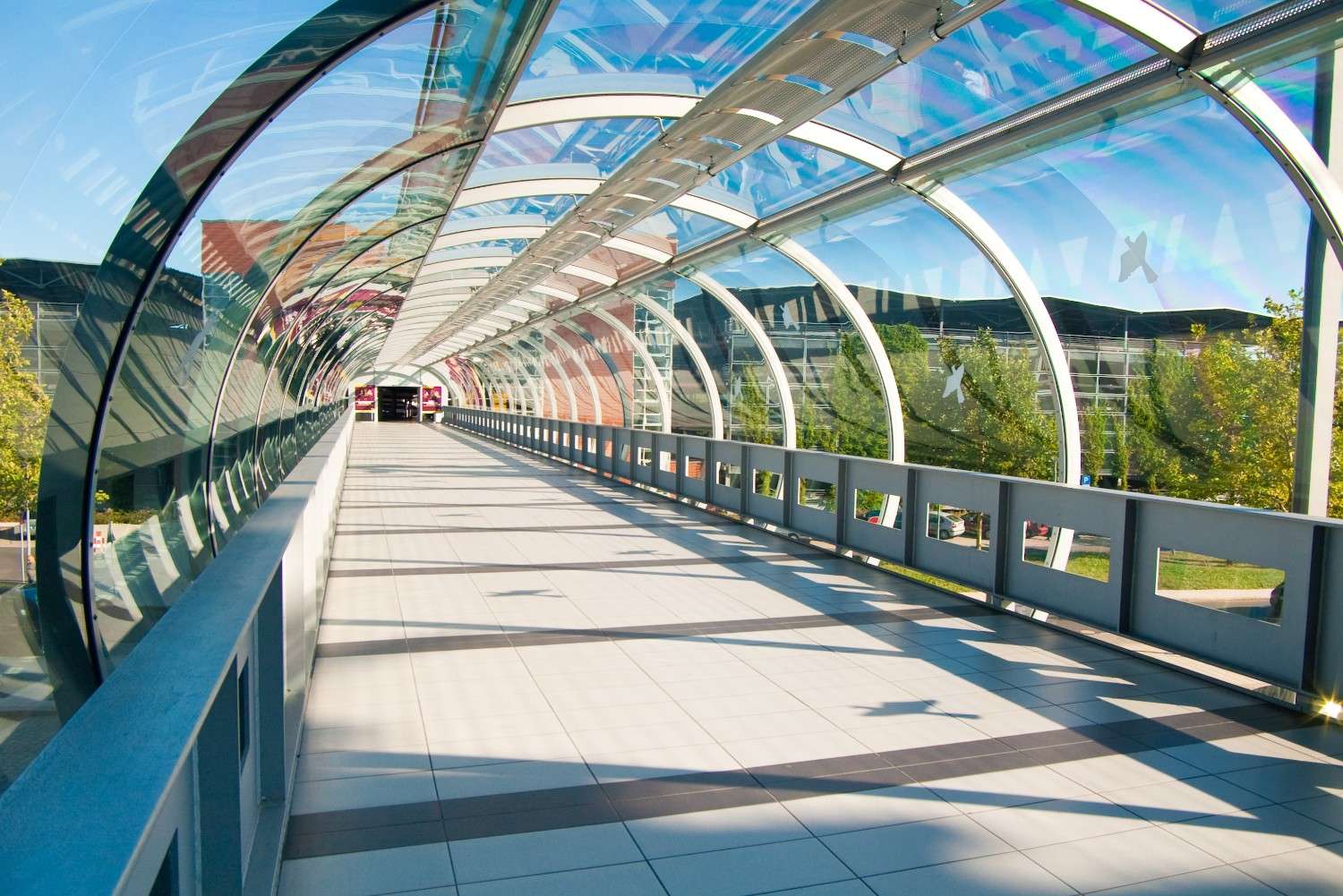
Glass walkway covers use tempered or tempered-over-laminate panels on maintenance-free aluminum framing. They deliver maximum transparency, a premium architectural aesthetic, and unobstructed sightlines — making them ideal for flagship buildings, donor-funded facilities, and high-visibility campus corridors where a university walkway canopy must serve design intent as much as function.
Polycarbonate walkway covers use multi-wall panels that combine light transmission, thermal insulation, impact resistance, and design flexibility at a lower material cost. Polycarbonate can be curved easily, making it the preferred material for barrel-type walkway covers that span long distances between buildings. Crystal Structures’ Sunpal standing seam polycarbonate system is specifically engineered for walkway and canopy applications, with stainless steel locking clips rated for maximum wind uplift and built-in allowance for thermal expansion and contraction.
For most campus master plans, the answer is both — glass canopies at primary entrances and signature buildings, polycarbonate covers along utilitarian pedestrian routes connecting academic halls, residence facilities, dining centers, and parking structures.
Engineering Walkway Covers for Campus-Specific Conditions
Every Crystal Structures canopy undergoes a complete engineering analysis sized to the project’s specific location. This includes wind uplift, live loads, snow drift loads, and seismic requirements — not generic national averages, but the actual conditions the structure will face on that campus.
This matters because campus walkways often span open areas between buildings where wind loads are amplified by channeling effects, and snow drift accumulates against adjacent structures. A walkway cover engineered to generic specifications may perform adequately in mild conditions but fail under the exact loading scenario the campus experiences most.
Crystal Structures’ engineering-driven approach ensures every walkway canopy installation is sized, anchored, and detailed for its actual environment — not a spec sheet estimate.
Connecting Buildings Without Disrupting Campus Architecture
One concern architects and campus planners raise is that covered walkways will clash with existing building aesthetics. Glazed canopy systems address this directly. Aluminum framing can be powder-coated in any color to match or complement adjacent structures. Glass and polycarbonate panels maintain visual openness rather than creating heavy, opaque corridors. And the range of profiles available — flat, single-slope, barrel vault, curved eave — gives designers enough flexibility to respond to the architectural language of each campus zone.
Crystal Structures’ design team collaborates with campus architects at no upfront cost to develop walkway solutions that integrate with master plan aesthetics rather than working against them.
Reducing Long-Term Campus Maintenance Costs
Covered walkways pay for themselves over time through reduced maintenance across multiple campus systems:
- Fewer slip-and-fall claims and lower insurance premiums
- Less snow and ice removal on protected walkway surfaces
- Reduced floor maintenance inside building entrances (less tracked-in water and debris)
- Lower HVAC costs at entry vestibules shielded from wind-driven rain and temperature swings
- Extended pavement life on walkway surfaces protected from freeze-thaw cycling
Aluminum framing requires no repainting and resists corrosion indefinitely. Polycarbonate panels maintain structural integrity and light transmission for 20 years or more. The total cost of ownership is a fraction of the ongoing expense institutions absorb from unprotected pedestrian infrastructure.
Planning covered walkways for your campus? Contact Crystal Structures for a no-cost design collaboration with your campus architecture team.